
Every few months someone declares carousels dead or Reels overrated. For a small business, the question isn't which format is winning. It's which one does the job this particular post needs to do. Here's how to decide, and a weekly mix that works for most cafés, salons, shops and service businesses.
Are carousels or Reels better on Instagram in 2026?
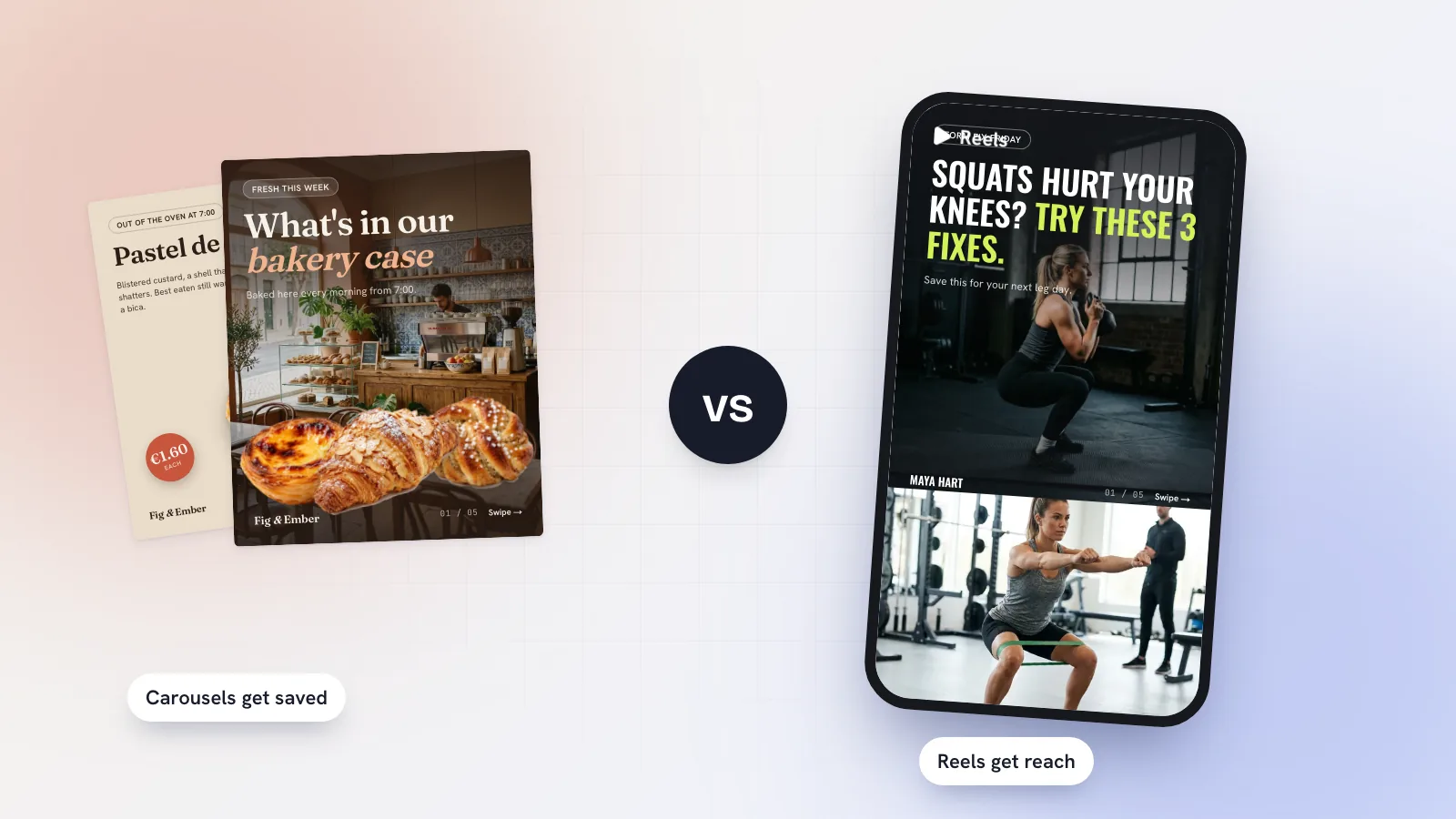
Neither, in general. They're good at different things. Reels are built for discovery: Instagram shows them to people who don't follow you yet, which is how new customers find you. Carousels are built for depth: people swipe, read, save and come back. In our experience, Reels tend to bring reach and carousels tend to bring saves and messages from people who were already half interested.
| Reels | Carousels | |
|---|---|---|
| Best for | Reaching people who don't follow you | Teaching, comparing, showing a range |
| Typical result | Views, profile visits, new followers | Saves, shares, DMs, considered purchases |
| Effort to make | Filming and editing, even if short | Photos or designed slides plus writing |
| Shelf life | Short burst, sometimes resurfaces | Gets saved and revisited |
| Works without a face on camera | Yes, with hands, process and text | Yes, easily |
What has changed for each format?
A few things are worth knowing as of autumn 2026. Instagram, led by Adam Mosseri, has been pushing original content over reposted or aggregated material, so both formats work best when you make them yourself. Creators have more control too, including a custom profile grid and captions on individual carousel slides, which makes carousels easier to use for step-by-step content. Meta's Edits app has made Reels quicker to cut on a phone, with a desktop version announced. Feed controls, first tested on Reels and then Explore, are now arriving in the main feed, which means people can tune what they see more directly. That rewards posts people actually want, whatever the format.
There's more on the first of those in our piece on Instagram's original content push.
When should a small business post a Reel?
- When you want new people to find you. A new opening, a new service, a busy season coming up.
- When movement tells the story. Latte art, a blow-dry, wrapping a gift, a before-and-after.
- When the place sells itself. The walk to your door, the morning light, the queue on a Saturday.
- When you can show something in under 30 seconds. Short and finished beats long and rambling.
You don't need to talk to camera or follow a trend. Hands, process and a line of on-screen text are enough. Say what you do and where you are in the caption and on screen, because people search Instagram for local things.
When should a small business post a carousel?
- When you're teaching. Five ways to keep colour from fading, how to brew at home, what to ask a builder.
- When you're showing a range. The new menu, this week's stock, three treatment options with prices.
- When you're comparing. This or that, before and after, small, medium or large.
- When you want a message. A carousel that ends with “DM us to book” tends to reach people who've just read every slide, which is a good moment to ask.
A good carousel has a first slide that makes the promise (“5 ways to make your blow-dry last”), one idea per slide, and a last slide with a clear next step.
What's a good weekly mix?
For most small businesses posting four times a week, a simple split works: two Reels to reach new people and two carousels to turn interest into visits. If you only post three times, make it two of whichever format your numbers favour and one of the other. Here's how that looked for Fig & Ember, a brunch café in Lisbon:
| Day | Format | Post |
|---|---|---|
| Monday | Reel | Opening routine in quick cuts |
| Wednesday | Carousel | The autumn brunch menu, one dish per slide |
| Friday | Reel | The cardamom bun from dough to tray |
| Saturday | Carousel | Five favourite spots in Príncipe Real |
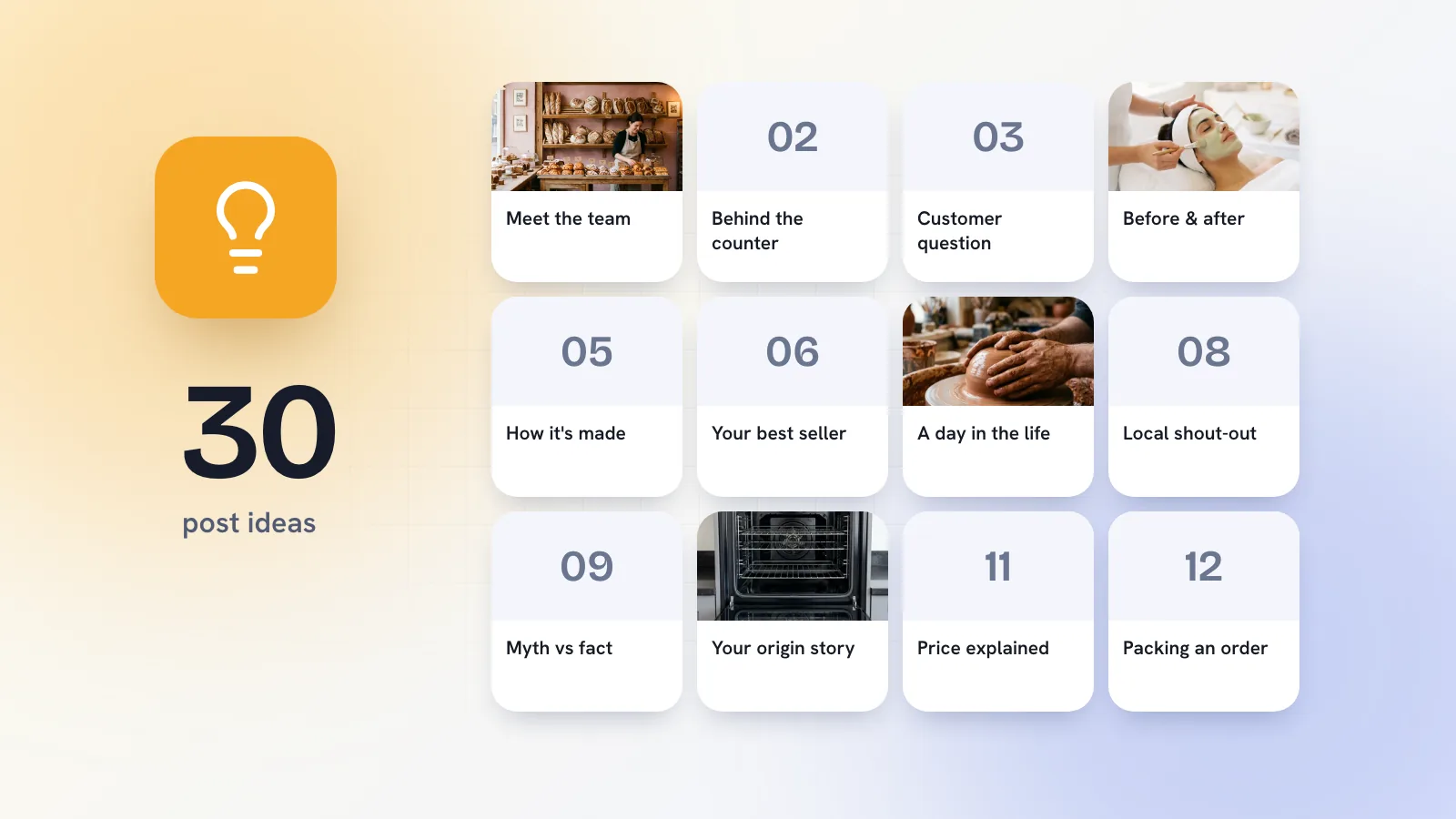
Want more ideas to fill those slots? See 30 post ideas for local businesses, or the full four-week layout in our content calendar template.
How do you know which format works for you?
General rules only get you started. After four to six weeks of posting both, compare them on the numbers that matter to a local business: saves, shares, profile visits, DMs and people who mention a post in person. Views alone flatter Reels; likes alone tell you very little. If carousels keep bringing in bookings and Reels keep bringing in followers who never visit, shift the mix.
Kebo's Analytics does this comparison for you. Its What works view shows which formats, hooks, pillars and days win for your account, and you can review any single post for ideas to try next. When you're ready to make the next one, Content Studio writes Reel scripts and designs carousels in your own colours, fonts and photos. If you run a salon or clinic, see how that fits a working week on our salons and clinics page.