
Discovery used to mean two things: a Google search or a lucky moment in someone's feed. Now there's a third route. People type "quiet café to work from Lisbon" into TikTok or Instagram, or ask an AI assistant "where should I get my hair coloured in Bristol?", and act on what comes back. You can't control either completely. You can make it much easier for both to understand who you are and recommend you.
What is social search, and why does it matter for small businesses?
Social search is people using the search bar inside a social app instead of a search engine. It's most common for anything visual or based on taste: food, beauty, fitness, decor, gifts, days out. Someone searching this way is often close to a decision. They want to see the place, the result or the product before they go.
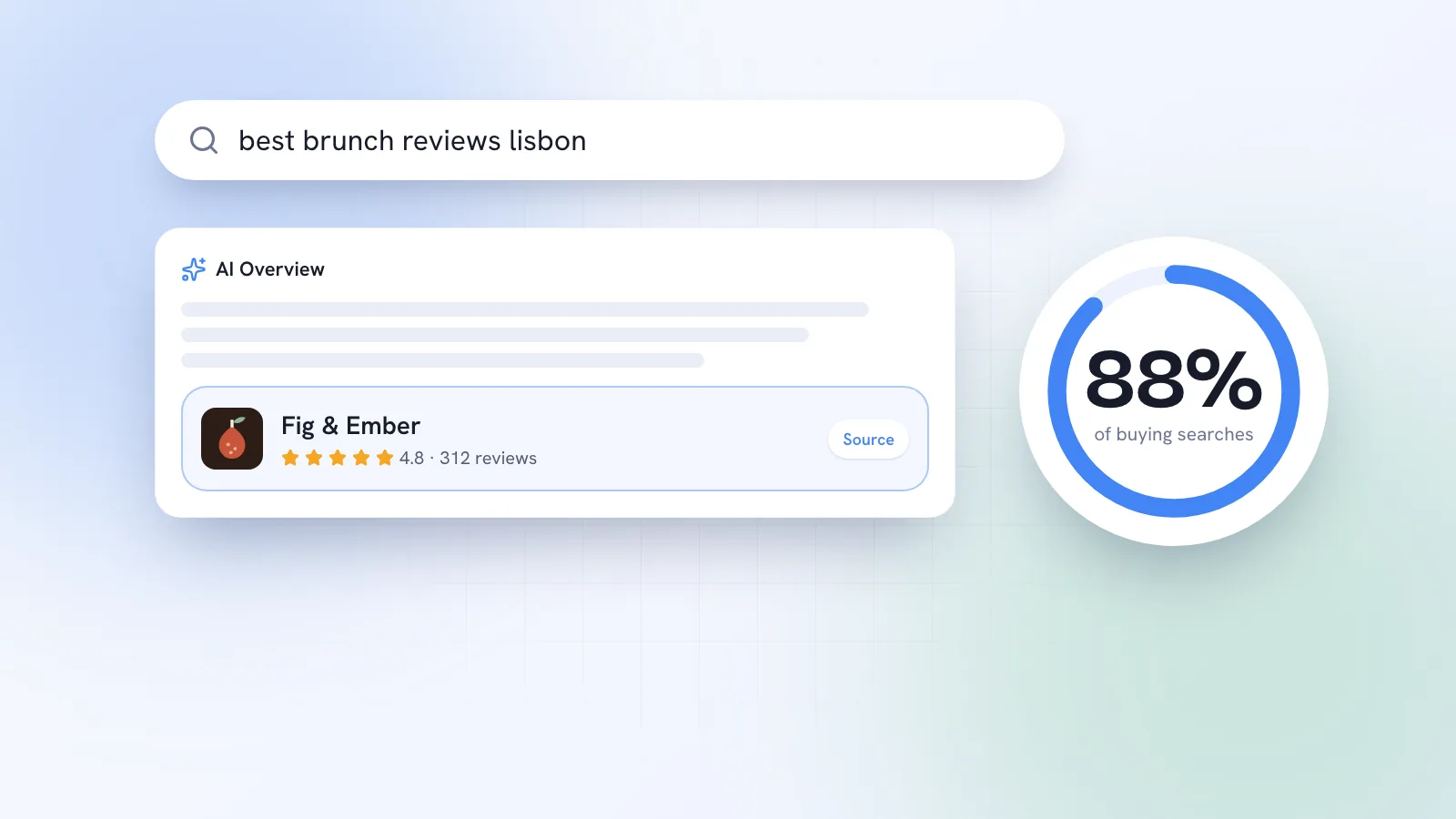
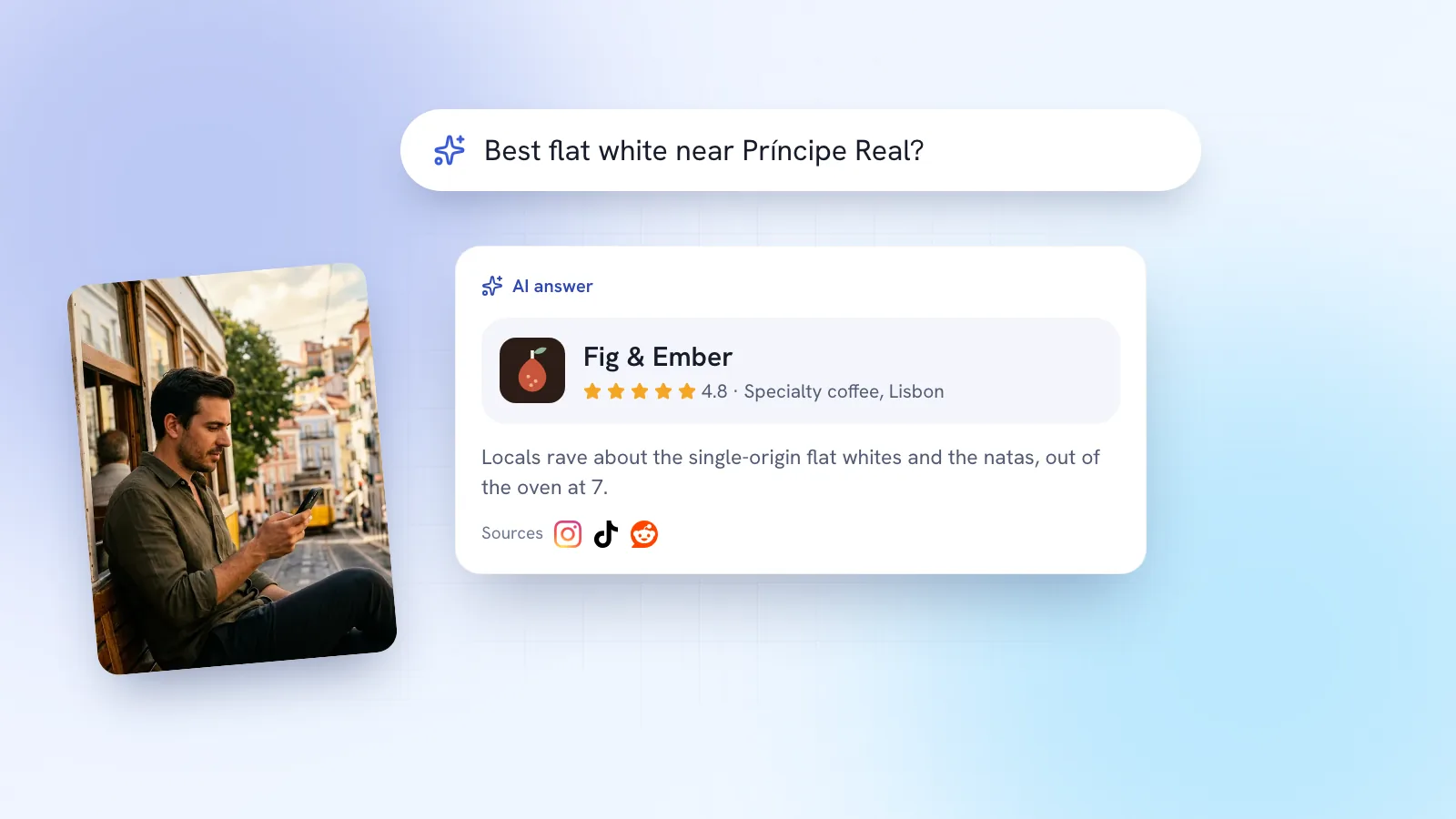
AI answers work alongside this. People ask ChatGPT, Claude, Perplexity or Google's AI answers for recommendations and get a short list with reasons. Those tools build answers from what they can find and read about you. Meanwhile, generic AI-written content is getting ignored by real people, so the businesses that win here are the clear, specific and consistent ones, not the ones posting the most.
How do you make your social profile search-friendly?
Your profile is the first thing both a person and a search system read. Treat it like a listing, not a slogan.
| Profile field | Vague version | Search-friendly version |
|---|---|---|
| Name field | Fig & Ember | Fig & Ember | Brunch & Coffee Lisbon |
| Bio line 1 | Good vibes and great coffee ✨ | Specialty coffee and brunch in Príncipe Real |
| Bio line 2 | Come say hi! | Open daily 8:30–16:00 · Walk-ins only |
| Link | Linktree with 9 links | One link to menu and directions |
On Instagram the name field is searchable, which is why adding what you do and where is worth the characters. Keep your handle the same across platforms if you can (Fig & Ember uses @figandember everywhere), so people and AI tools can tell all those accounts belong to one business.
How do you write captions that show up in search?
Write the first line of a caption the way a customer would describe what they want. "New this week" tells a search system nothing. "Gluten-free brunch in Príncipe Real: new this week" tells it what, where and for whom.
- Lead with the plain phrase: the service, product or dish, plus the area.
- Answer one question per post: "How long does a balayage take?" or "Can I bring my dog?"
- Use the words customers use, not internal names. "Lash lift", not "Signature Lash Ritual".
- Keep hashtags few and relevant. A handful of specific ones beats a block of 30 general ones.
- Stay in your own voice. Search-friendly doesn't mean stiff. Our brand voice guide shows how to keep both.
Should you say keywords out loud in videos?
Yes. On TikTok, creators and marketers report that keywords said in the video, shown in on-screen text and written in the caption all help the video get matched to searches. The same habit makes sense on Reels. Say the phrase naturally in the first few seconds ("If you're after brunch in Príncipe Real..."), add it as on-screen text, then repeat the idea in the caption. We go into the TikTok side in detail in TikTok search is the new Google for local customers.
How do AI assistants decide which businesses to recommend?
Nobody outside these companies knows the exact process, and it varies by tool. What's reasonable to assume is that an assistant can only recommend what it can find, read and feel confident about. That points to three practical habits.
Keep your business information identical everywhere
Your name, address, area, opening hours, phone number and what you offer should match on your website, Google Business Profile, Instagram, TikTok, Facebook and any listings. If your website says you close at 17:00 and Instagram says 16:00, a person gets confused and an AI tool has a reason to doubt both. Pick one version, write it down and copy it exactly.
Be quotable
AI answers tend to lift short, clear statements. Write some of yours on purpose. "Fig & Ember is a specialty coffee and brunch café in Príncipe Real, Lisbon, open daily from 8:30, with vegan and gluten-free options" is easy to quote. "We're all about good vibes" isn't. Put sentences like this on your website's about page, in your bio and in posts that answer common questions.
Answer real questions in public
The questions you get in DMs every week (prices, parking, booking, allergies, how long things take) are the same questions people ask AI assistants. Answer them in posts, pinned comments, an FAQ page on your website and in genuinely helpful replies in places like Reddit, where people ask for recommendations. Our guide to Reddit marketing without getting banned covers how to do that without being salesy.
What should you avoid?
A few habits work against you in both social search and AI answers:
- Keyword stuffing. A caption that repeats "best café Lisbon" five times reads badly and gives people a reason to scroll on.
- Mass-produced AI posts. Generic captions with no real details are easy to ignore and give an assistant nothing specific to say about you.
- Out-of-date details. Old prices, last summer's hours or a closed second location cause confusion that lingers.
- Different names on different platforms. "Fig and Ember Café", "Fig&Ember" and "F&E Lisboa" look like three businesses.
A one-hour checklist to get started
- Write one factual sentence about your business: what, where, for whom, when you're open.
- Paste it, word for word, into your website, Google Business Profile and every social bio.
- Update your Instagram and TikTok name fields to include what you do and where.
- List five questions customers ask most and plan one post for each.
- For your next three videos, say the main keyword in the first line and add it as on-screen text.
- Check your opening hours and contact details match on every platform.
Kebo's Brand DNA reads your website and social profiles and writes up who you are, what you offer and who you're for, which gives you a consistent description to reuse everywhere. Content Studio then drafts captions per platform and video scripts from it, and Analytics shows which formats and hooks work for you. If you run a local shop, studio or clinic, see how it fits on our page for local businesses.