
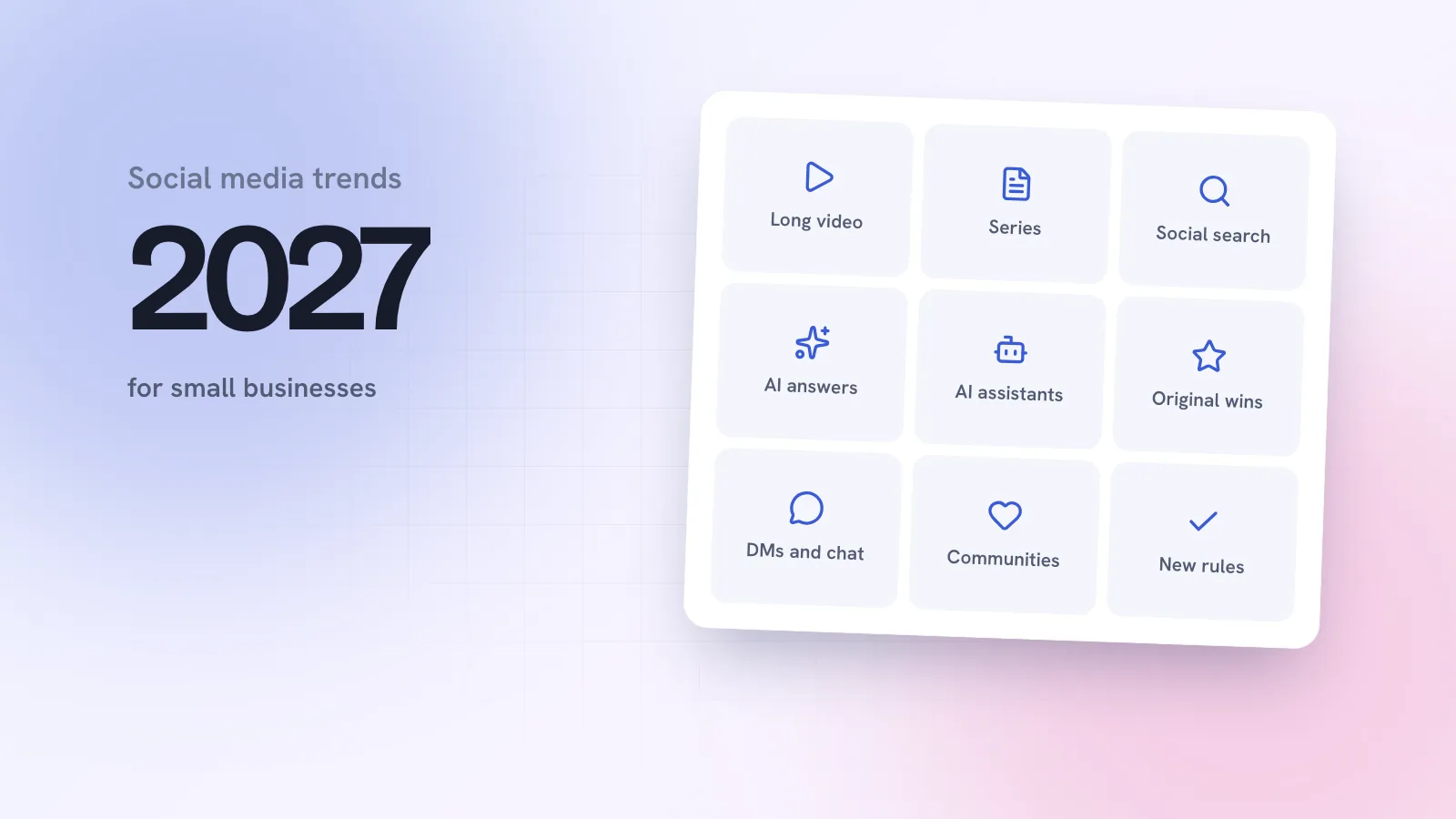
Most trend lists are guesses dressed up as facts. This one starts from what platforms actually announced and shipped in 2026, with links to the sources, then says what we expect in 2027 and what a small business should do about it. Where we're giving our opinion, we say so. If you run a café, salon, studio or small shop and you're planning next year's social media, this is the short version of what matters.
The nine trends at a glance
| Trend | What happened in 2026 | What to do |
|---|---|---|
| 1. Long video returns to short-video apps | Instagram tests 90-minute Features linked from Reels | Turn your best Reels into trailers for something longer |
| 2. Episodic content | YouTube Shorts series; Instagram tests Series | Plan posts as numbered seasons |
| 3. Search moves to social and AI answers | AI Overviews on 88% of tracked commercial keywords | Write captions and profiles people can search |
| 4. AI assistants inside the apps | Meta's Creator Assistant and Edits assistant | Use them for analysis, not for your voice |
| 5. Originality is enforced | Instagram and Facebook demote reposts | Film what only you can film |
| 6. Communities over broadcasting | Threads Communities; Reddit's For You feed | Answer questions where your customers gather |
| 7. DMs become the shop counter | WhatsApp Business Platform charges for replies again | Reply fast; know which messages cost money |
| 8. Regulation and age checks | UK under-16 plan for spring 2027; CMA investigates Meta | Check your audience; read terms before you agree |
| 9. TikTok under new US owners | US joint venture closed in January 2026 | Keep TikTok, but don't rely on it alone |
1. Long video returns to short-video apps
What happened
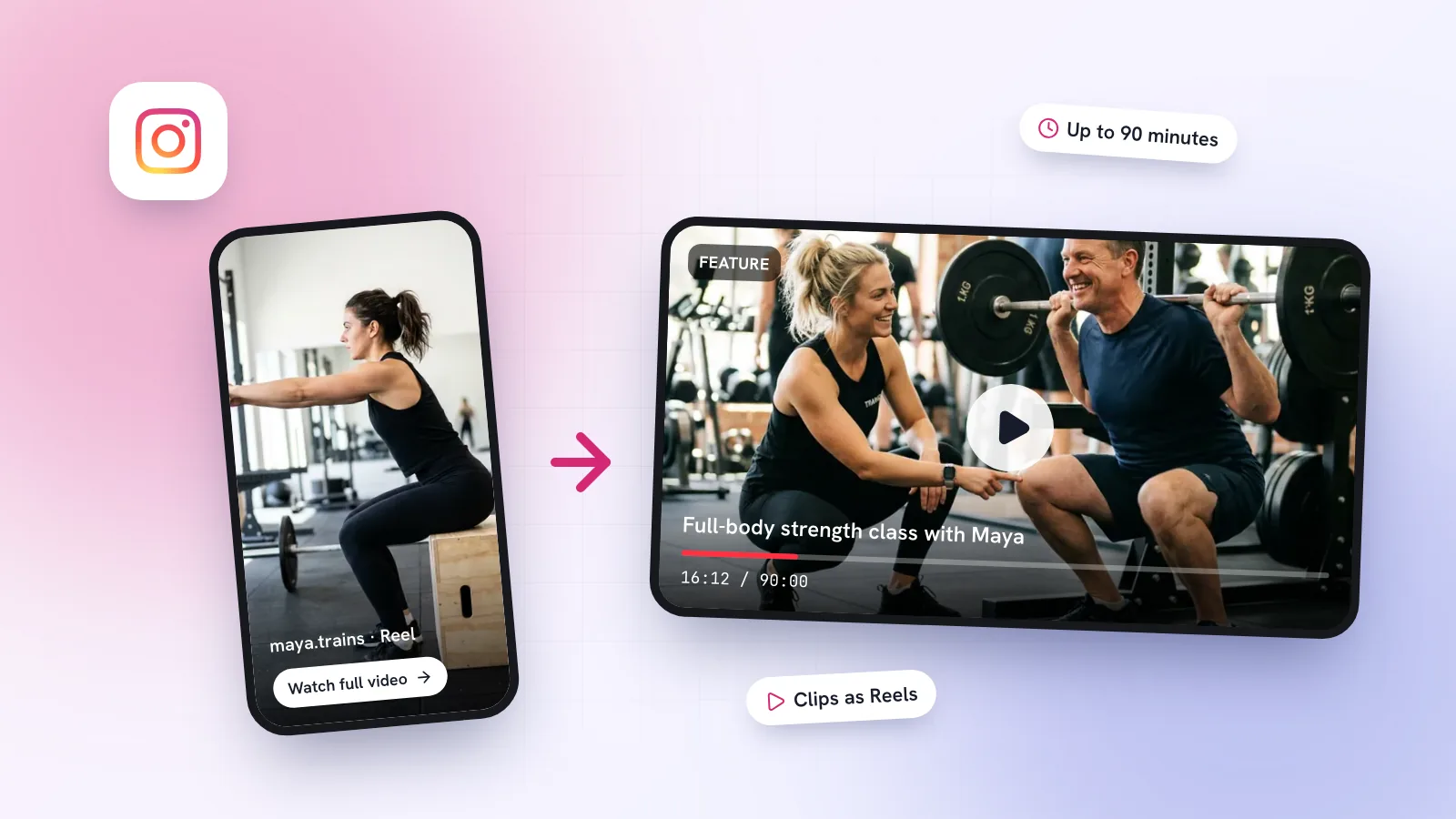
On 26 October 2026 Instagram announced Features, a test of horizontal videos up to 90 minutes long. It started in Brazil and is expanding to a small test in the US. Creators can cut clips from a long video and post them as Reels that link back to the full version (TechCrunch). Money is the open question: a Meta spokesperson said it is "too early to share a long-term monetization model". Business Insider then reported that Instagram had offered some YouTube creators $50,000 to $500,000 to post Features, as summarised by Dexerto; Instagram said the deal details are confidential.
Our view for 2027
We expect Features, or something like it, to reach far more accounts in 2027, and short clips to be judged more on whether they lead somewhere. That's our reading of the direction, not something Instagram has promised. Our full breakdown is in Instagram long-form video: Features explained.
What to do
- List two or three longer things customers would genuinely watch: a full class, a start-to-finish appointment, a coffee masterclass.
- Film them now, even if you only post the clips as Reels for the time being.
- Treat each short clip as a trailer with a clear next step: watch the full version, book, or visit.
2. Episodic content people follow, not one-off posts
What happened
At Made on YouTube on 23 September 2026, YouTube said creators can now structure Shorts into seasons and episodes, with custom thumbnails and episodes that play in order, rolling out on web, mobile and TV (YouTube). In June 2026 Meta started testing Series for Reels on Instagram and Facebook with selected creators (TechCrunch), and in October Instagram said it is working on a profile hub for episodic Reels (TechCrunch).
Our view for 2027
We think series will become a normal posting format rather than a creator novelty, because platforms are building tools that reward people for watching the next episode. Again, that's our opinion.
What to do
- Pick one repeatable format: "Fig & Ember's Saturday bake, episode 4", "Form fix Friday", "Week 3 of the shop refit".
- Number your episodes consistently now, so they're ready to group when the tools reach you.
- Our guide to YouTube Shorts series and Instagram Series shows how to plan a first season.
3. Search moves to social feeds and AI answers
What happened
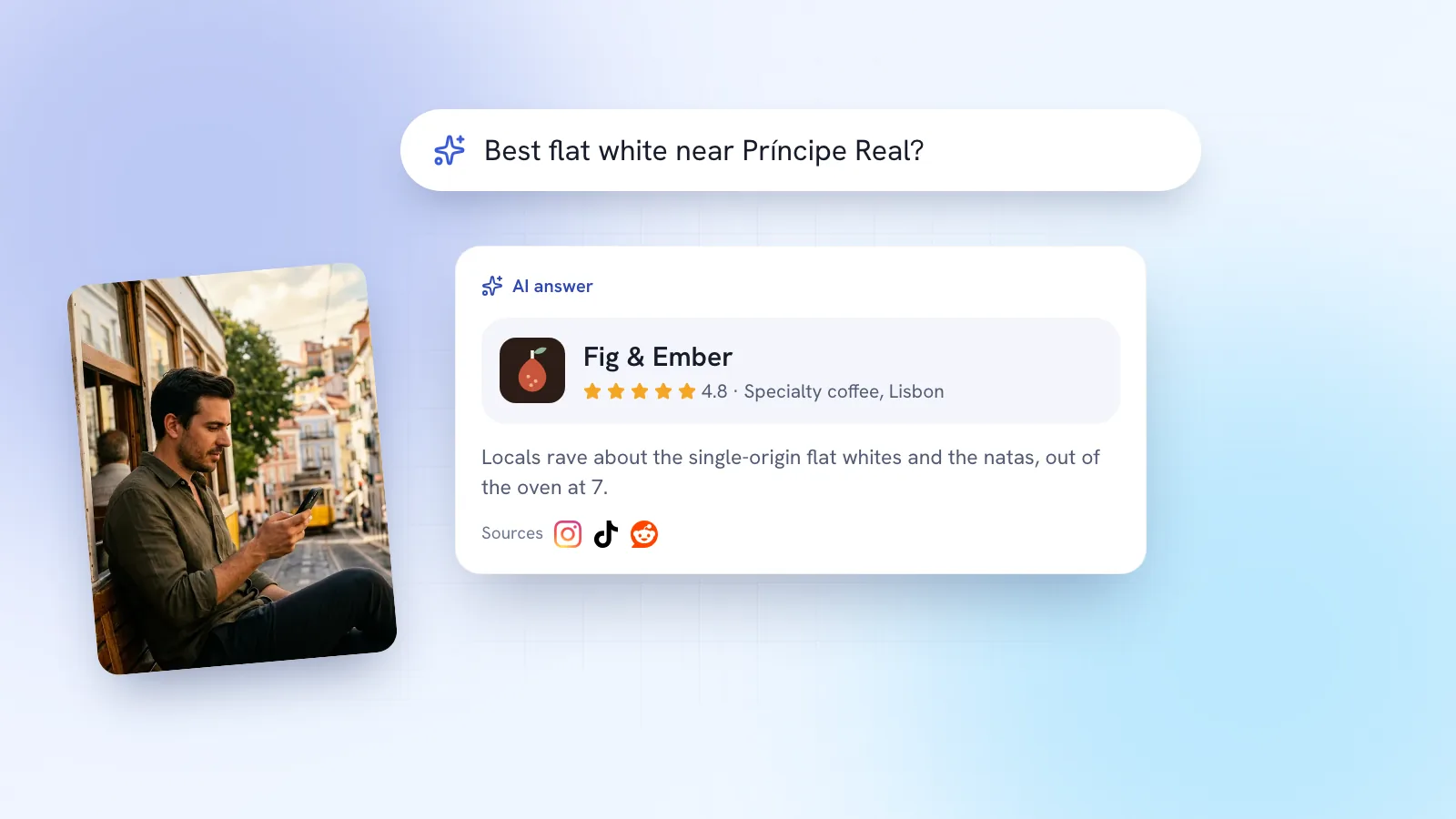
A Semrush study published on 21 October 2026 tracked 400 commercial keywords in banking, software and ecommerce, and found Google AI Overviews on 88% of them in August 2026, up from 45.75% in September 2025. It's one vendor's panel of US results, not all searches. Since 31 August, Google Search Console has shown every site how its pages appear in Google's AI features, with a setting to opt out (Google), and on 15 October Google said it is adding more links inside AI answers (Google). Pew Research found people clicked a traditional result on 8% of visits with an AI summary, against 15% without one, in browsing data from 900 US adults in March 2025 (Pew, July 2025).
The effect reaches social platforms too. Reddit told shareholders its search referral traffic was "down meaningfully in Q3, with the decline accelerating later in the quarter" (Reddit Q3 2026 letter).
Our view for 2027
We expect fewer people to click through from Google to small business websites, and more to decide inside an AI answer, a TikTok search or an Instagram profile. The businesses that get chosen will be the ones described clearly and consistently everywhere. That's our view.
What to do
- Say what you do and where in plain words, in captions, on-screen text and your bio: "brunch in Príncipe Real", "sports massage in Bristol".
- Keep your Google Business Profile, opening hours and prices current; check the AI report in Search Console once a month.
- Read how to show up in social search and AI answers, Google AI Overviews for small businesses and TikTok search for local businesses.
4. AI assistants move inside the apps
What happened
On 4 June 2026 Meta rolled out Creator Assistant on Facebook for creators in the US, Canada and India. It answers questions about your own performance, such as when to post and what people say in comments, and helps brainstorm ideas (TechCrunch). At the end of September, Instagram began rolling out an AI assistant in its Edits app to US users. It reads your account's views, follows, retention and shares, and suggests ideas, hooks and captions, free up to a daily limit, as reported by RouteNote.
Our view for 2027
We expect every major platform to offer a built-in assistant, and generic AI captions to become even easier to spot and scroll past. The advantage will go to businesses that use AI to work faster but still sound like themselves. That's our opinion.
What to do
- Use the free in-app assistants for questions about your own numbers. They're good at "what worked last month?"
- Write down how you talk: words you use, words you never use, how you'd answer a complaint. Give that to any AI tool you use.
- Read every AI draft before it goes out. Our guide on whether AI can reply to Instagram comments and DMs covers what Meta allows.
5. Originality is enforced, not just encouraged
What happened
In April 2024 Instagram said it would replace reposted videos in recommendations with the original and keep accounts that only aggregate others' content out of recommendations (Tubefilter). In July 2025 Facebook said accounts that repeatedly reuse other creators' content without meaningful changes would lose monetisation and see reduced distribution, with duplicate videos shown less (Meta).
Our view for 2027
As AI makes copying and remixing cheaper, we expect platforms to get stricter about it, not looser. Owning your footage will matter more. Our opinion, based on the direction above.
What to do
- Stop posting supplier videos, memes and trend clips unchanged. Recreate the idea with your own footage.
- Keep a running list of moments only you can film: the first batch of the day, a before and after, packing an order.
- More detail in Instagram's original content push.
6. Communities over broadcasting
What happened
Threads launched Communities in October 2025 (Meta), then added Community Champions and local communities; Threads reportedly passed 500 million monthly users in mid-2026, a figure that hasn't been independently verified. On 28 October 2026 Reddit introduced two home feeds, For You and Following, rolling out globally; For You mixes joined communities with recommendations based on your interests (TechCrunch). In the same week Reddit said it is "shifting Reddit to a logged-in-only experience", testing it in select markets outside the US in Q4 (Reddit Q3 2026 letter).
Our view for 2027
We think a helpful answer in the right community will reach more new people in 2027 than a polished post to your own followers, and that fewer people will find Reddit threads through Google without logging in. That's our view.
What to do
- Join two or three communities your customers actually use, local or topic-based, and read before you post.
- Answer questions properly and don't advertise. Say who you are if it's relevant.
- See Threads for business in 2026 and Reddit's new For You feed. Kebo's Engagement Center finds these conversations each morning and drafts an answer; you post it yourself.
7. DMs become the shop counter, and some get pricier
What happened
On Instagram and Messenger, businesses can reply to a DM within 24 hours of the person's last message, through Meta's Messaging API. On 1 October 2026 Meta started charging again for service messages on the WhatsApp Business Platform: each business number gets 1,000 free delivered service messages a month, then pays per message, and utility messages sent inside the customer service window are charged too (Meta). The free WhatsApp Business app on your phone isn't affected.
Our view for 2027
We expect more of the sale to happen in the DM, and more of the tooling around DMs to become paid. Speed of reply will matter more than clever copy. Our opinion.
What to do
- Aim to answer DMs within the hour during opening times; our piece on DM response time explains why.
- If you use WhatsApp through software, check your volumes against the October pricing change.
- Kebo's Inbox drafts every Instagram and Messenger reply in your voice and shows the time left in the 24-hour window; you read it and press Send.
8. Regulation and age checks shape who sees you
What happened
Australia's minimum age of 16 for major social platforms took effect on 10 December 2025 (eSafety). On 15 June 2026 the UK government announced plans to bar under-16s from social media platforms including Instagram, TikTok, YouTube, Snapchat, Facebook and X, with measures going to Parliament before Christmas and coming into force in spring 2027 (GOV.UK). Separately, Meta paused new commercial terms that had been due on 20 November, and on 30 October the CMA opened a Competition Act investigation into them, saying no decision has been made (CMA).
Our view for 2027
We expect more age checks when people sign up, and fewer teenagers on the main apps in the UK and Australia. Businesses selling to families will need to reach parents rather than teens. We also expect business terms on the big platforms to keep changing. That's our view, not legal advice.
What to do
- Check your audience age split in each app's insights. If a lot of it is under 16, plan how you'll reach parents instead.
- Read any new terms before you accept them; our summary of Meta's business terms update is kept up to date.
- Keep a customer list you own, such as email or bookings, so a platform change can't cut you off.
9. TikTok under new US owners, same search habits
What happened
In January 2026 the deal creating a US joint venture for TikTok closed, with the recommendation system to be retrained on US user data and secured in Oracle's US cloud (MacRumors). TikTok hasn't published an official "2026 algorithm" announcement. Creators and marketers consistently report that watch time, rewatches and early drop-off matter most, and that keywords said and shown in videos help people find them in search.
Our view for 2027
We don't expect the basics to change much for a small business outside the US: useful, watchable videos that answer a search will keep working. US accounts may see some shifts as the retrained system settles. Our opinion.
What to do
- Make videos that answer what local customers search for: "best brunch Lisbon", "how much is a full set".
- Say the keyword in the first few seconds and put it in the on-screen text and caption.
- Post the same core idea, re-cut for each app, so no single platform holds all your reach.
What we think is overhyped for 2027
- Fully AI-generated feeds. AI is useful for drafts and analysis. A feed of generic AI images and captions is easy to spot, and platforms are steering reach towards original content.
- Posting everywhere, every day. Two platforms done well beat five done badly. Add a channel only when you can keep it up.
- Guaranteed AI answer placements. Google says no special markup or files are needed to appear in its AI features (Google Search Central). Anyone promising a guaranteed spot is guessing.
- VR and AR shopping for local businesses. Interesting, but not where your customers decide which café or salon to visit next year.
- Follower counts as the goal. Bookings, DMs and repeat visits pay the bills. A smaller audience that messages you is worth more.
Your 2027 social media planning checklist
- Pick your two main platforms and one community (a Threads community, a subreddit or a local group).
- Rewrite your bio and pinned posts so they say what you do and where, in the words customers search.
- Choose one numbered series format and plan the first six episodes.
- List three longer videos you could make and the short clips that would trail them.
- Audit the last 30 posts: cut anything reposted, borrowed or unchanged from a supplier.
- Write a one-page voice guide for any AI tool you use, and keep a human check on everything published.
- Set a DM reply target and know which messages, if any, cost you money.
- Check your audience's age split and your Search Console AI report.
- Every month, look at which posts led to enquiries, not just likes, and do more of those.
Kebo can carry much of this week to week. The Content Studio turns your ideas and photos into carousels and images in your brand style (Reels are coming soon), and Analytics shows which formats, hooks and days actually bring results. For the bigger picture, see the small business social media playbook.