
Most small businesses don’t fail at social media because they lack ideas. They fail because there’s no system: a burst of posts in January, silence by March, and a DM inbox full of questions nobody answered. This playbook is the system. It’s written for owners who have perhaps three hours a week to give it, and it works whether you run a café, a salon, a physio clinic or a one-person Etsy shop.
We’ll use Fig & Ember, a specialty coffee and brunch café in Príncipe Real, Lisbon, as a running example. Swap in your own business as you read.
Which social media platforms should a small business use in 2026?
Start with one main platform and one supporting platform. Spreading thin across five is the most common reason small accounts stall. Choose based on where your customers already look for businesses like yours.
| Platform | Best for | What works there | Watch out for |
|---|---|---|---|
| Cafés, salons, clinics, PTs, product shops | Reels for reach, carousels for saves, Stories for regulars, DMs for bookings | Reposted or aggregated content is being pushed down in favour of original posts | |
| TikTok | Anything visual or demonstrable, local discovery | Short video with a strong first second; searchable words in captions and on screen | Follower count matters little; each video has to hold attention on its own |
| Local services, older customers, events | Community updates, events, Messenger enquiries, local groups | Organic reach on Pages is modest, so treat it as a support channel | |
| Threads | Coaches, consultants, opinionated founders | Short written takes, replies, Communities around your topic | Text-first, so it suits people who like writing |
Fig & Ember picks Instagram as its main platform, because people in Lisbon find brunch spots there and book tables by DM. TikTok is the supporting platform, mainly for short videos that show up when tourists search “brunch Príncipe Real”. Facebook gets the same posts cross-posted, with almost no extra effort.
If you’re unsure, read our pieces on TikTok search for local customers and Threads for business before you commit.
Set up your profile so it works while you sleep
Before you post anything, fix the profile. It’s the page every new visitor lands on after a Reel catches their eye, and most small business profiles leave them guessing. Check four things:
- Name field: include what you do and where, not only your brand. “Fig & Ember | Brunch & Coffee Lisbon” is searchable; “Fig & Ember” alone is not.
- Bio: one line on what you offer, one on who it’s for, one on how to book or buy. Skip the inspirational quote.
- Link: one clear destination, such as a booking page or menu. If you must use a link page, keep it to three or four options.
- Pinned or top posts: your best introduction, prices or how to book, and a post that shows the experience. New visitors decide in seconds.
Do the same on your supporting platform. It takes half an hour and keeps paying off for every post you make afterwards.
What are content pillars, and how many do you need?
Content pillars are the three or four themes everything you post belongs to. They stop you staring at a blank screen, and they teach followers what to expect from you. A good pillar sits where what you know meets what your customers care about.
Fig & Ember’s four pillars:
- Behind the bar: sourcing, roasting, how the flat white gets its texture. Builds trust and shows expertise.
- The plate: new dishes, the weekend special, the sourdough coming out of the oven. Drives visits.
- The neighbourhood: the market next door, the miradouro at sunset, regulars’ stories. Makes you part of the place.
- Practical info: opening hours, booking, dog-friendly, laptop policy. Answers the questions people DM about.
A salon might use transformations, aftercare tips, the team and booking info. A physio might use exercises, myths, patient stories (with permission) and how to book. The pattern is always the same: one pillar that shows skill, one that shows the product or result, one that shows people, one that removes friction.
Kebo’s Brand DNA does this research for you: it reads your website, your social handles and top posts in your niche, then writes your pillars with real customer complaints as evidence. You can edit every section.
How often should a small business post on social media?
Post as often as you can sustain for six months. For most small businesses that’s three to five posts a week on the main platform, plus Stories on days you’re open. Consistency matters more than volume, because both the algorithm and your followers learn your rhythm.
A weekly rhythm you can actually keep
| Day | Post | Pillar | Time it takes |
|---|---|---|---|
| Monday | Carousel: “3 things to know about our single-origin this month” | Behind the bar | 30 min |
| Wednesday | Reel: sourdough coming out of the oven, 12 seconds | The plate | 20 min |
| Friday | Reel or photo: weekend special and booking reminder | Practical info | 15 min |
| Saturday | Stories: the room filling up, a regular’s order | The neighbourhood | 5 min, on the day |
| Daily | 15 minutes of replies and engagement | All | 15 min |
Batch the planned posts in one sitting, ideally the same slot each week. Stories stay spontaneous. For a ready-made version with slots for each pillar, use our content calendar template, and if you’re stuck for topics, borrow from 30 post ideas for local businesses.
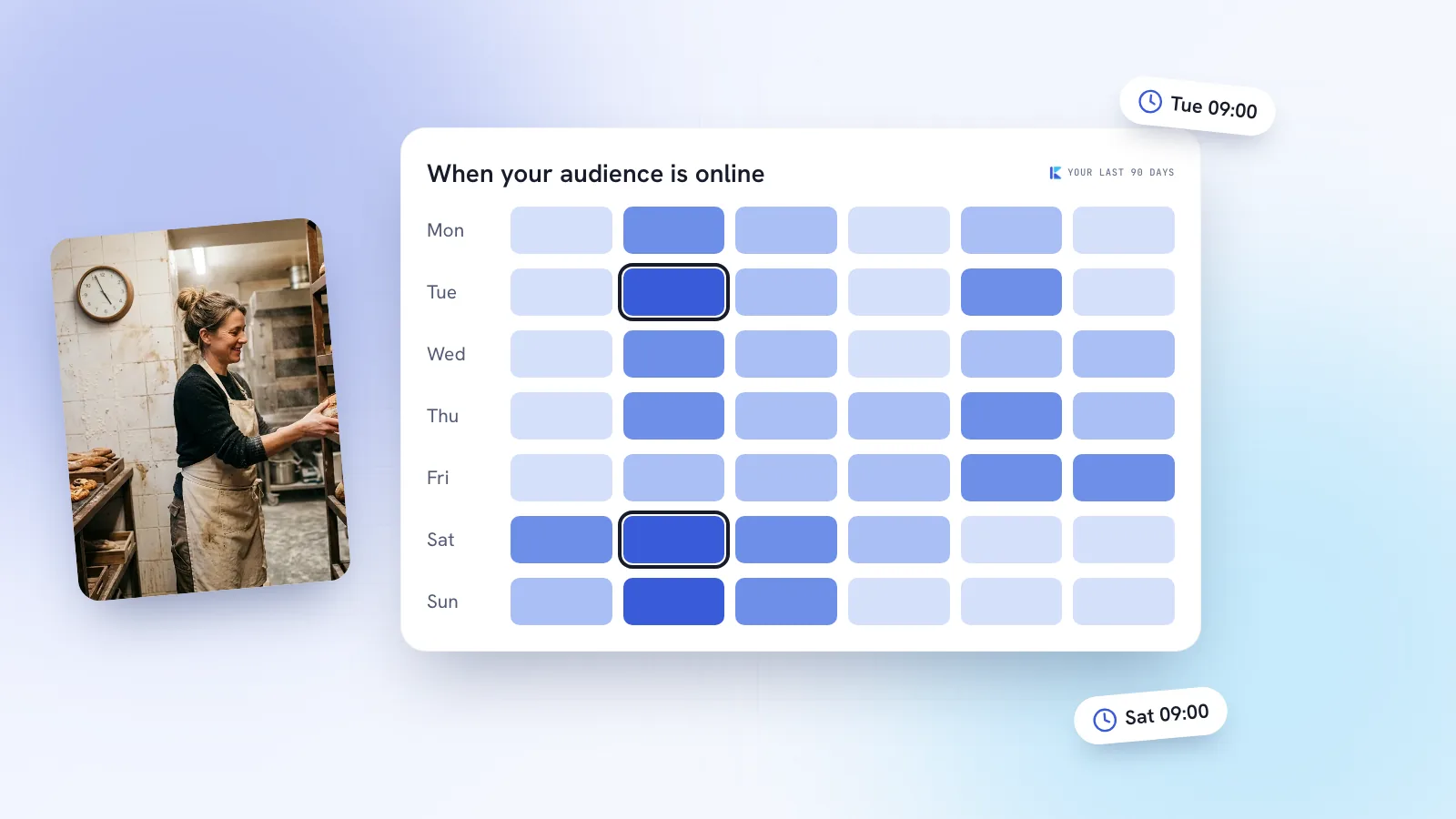
On timing: generic “best time to post” charts are averages of other people’s audiences. Your own analytics are a better guide, as we explain in the best time to post is in your own numbers.
Which content formats work best for small businesses?
Each format does a different job. Use them for that job rather than chasing whichever one is said to be favoured this month.
- Reels and TikToks reach people who don’t follow you yet. Open on the most interesting moment, keep it short, and put the searchable words (“brunch in Lisbon”) in the caption and on screen.
- Carousels get saved and shared. Use them for anything useful: guides, menus, before-and-afters, “how we make it”. Instagram now lets you caption each slide.
- Single photos still work for a strong image: a new dish, a finished haircut. Keep the caption specific.
- Stories are for people who already follow you. Use them for daily availability, polls and the casual stuff that keeps you top of mind.
- Threads posts suit opinions and quick tips, written as a short thread rather than one long block.
For a fuller comparison, see carousels vs Reels in 2026. One rule cuts across every format: make it yourself. Instagram has said plainly that original content will be favoured over reposts and aggregated clips. Our breakdown of Instagram’s original content push covers what that means in practice.
How do you get engagement on social media as a small business?
Engagement is a two-way street. Posting and waiting rarely works for a small account; you need to show up in other people’s comments too. Fifteen minutes a day is enough if it’s focused.
- Reply to every comment on your own posts in the first hour or two. Ask a follow-up question where it’s natural.
- Comment on five to ten posts from local accounts, neighbouring businesses and people in your niche. Say something specific. “Love this!” does nothing; “That pastel de nata crust looks properly laminated, is it a long rest?” starts a conversation.
- Answer questions in communities where your customers ask for help, such as local Facebook groups, Threads Communities or Reddit. Help first, no links unless asked.
- Build a few relationships with local creators and complementary businesses. One collaboration with the florist next door can beat a month of posts.
Our 15-minute daily engagement routine breaks this down minute by minute, and the Reddit marketing guide covers how to take part there without getting banned.
Kebo’s Engagement Center prepares posts worth engaging with each morning on Instagram, Threads and Facebook, and drafts a comment for each in your voice. For now you post them yourself: one tap copies the comment and opens the post, you paste it and mark it done. Daily limits keep it natural.
How do you turn Instagram DMs into sales?
This is where social media becomes revenue. Someone who DMs “do you have space Saturday for four?” is a customer about to happen. Treat your inbox like a phone ringing.
- Reply quickly. The person messaging you is probably messaging two competitors as well. Read why replying within the hour wins sales.
- Mind the 24-hour window. Meta lets businesses reply to Instagram and Messenger DMs within 24 hours of the customer’s last message. Miss it and the conversation is effectively closed.
- Always offer the next step. Answer the question, then make booking easy: a time, a link, a price.
- Use comment-to-DM sparingly. “Comment MENU and we’ll send it” works when the thing you send is genuinely useful. See comment-to-DM without spamming.
- Never cold DM. Messaging strangers first damages trust and can get your account restricted.
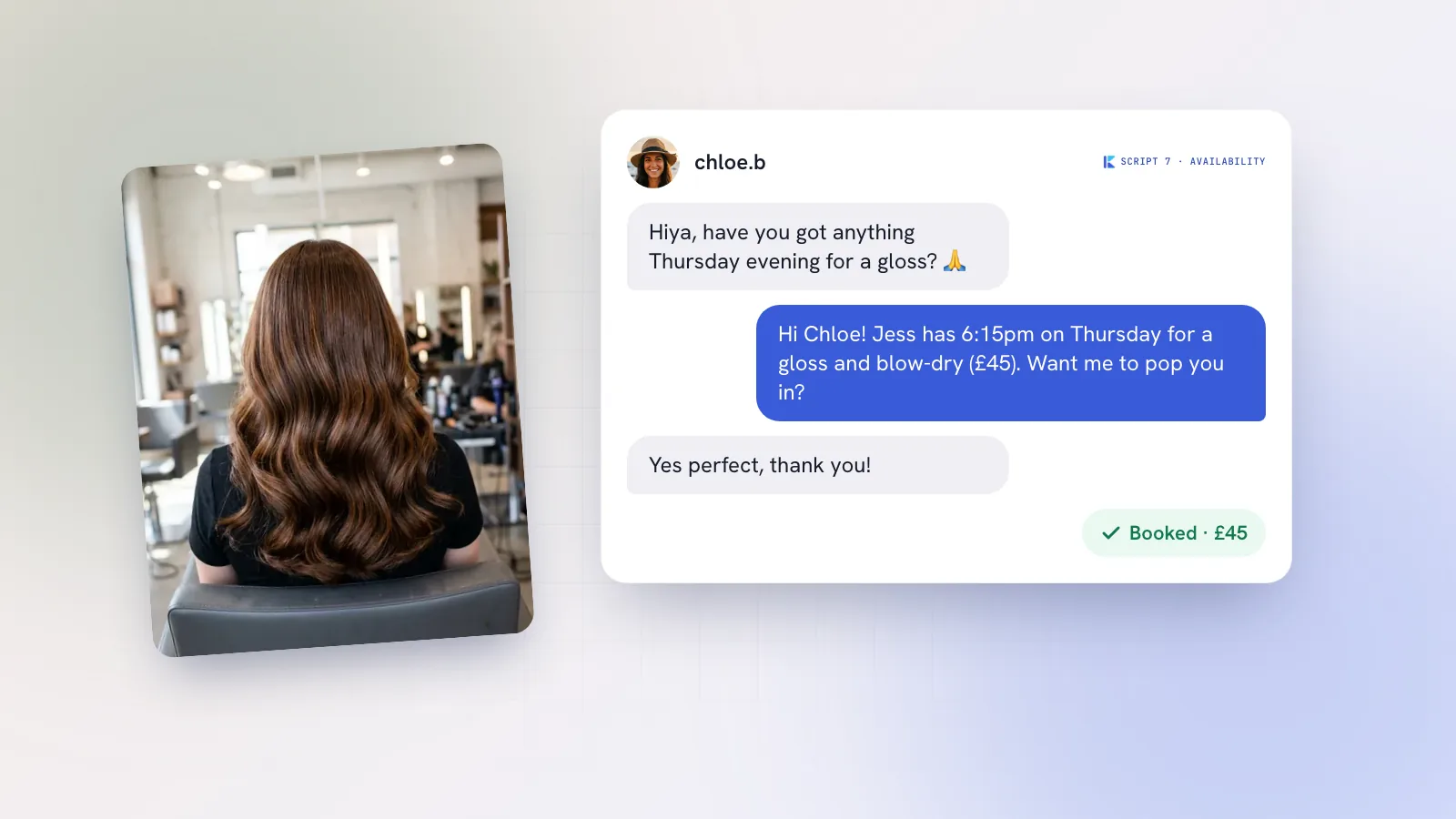
Hi! Yes, we have a table for four at 11:30 or 12:15 on Saturday. Which suits you? I’ll hold it under your name, and there’s a high chair if you need one.A Fig & Ember reply that answers, offers a choice and removes the next question
Our Instagram DM sales scripts has 20 replies like this for pricing questions, “is this still available?” and the dreaded “just looking”. In Kebo, the Inbox drafts every DM and comment reply in your voice, steering towards a booking or sale, and shows how much of the 24-hour window is left. You read the draft and press Send.
What social media metrics should a small business track?
Followers are the least useful number on your dashboard. Track the numbers that sit closest to money and to whether people found your content worth keeping.
| Metric | What it tells you | What to do with it |
|---|---|---|
| DMs and enquiries | Whether social is producing customers | Count them weekly and note which post prompted them |
| Bookings or sales from social | The real return | Ask “how did you find us?” at the till or booking form |
| Saves and shares | Content people found useful | Make more of the topics that get saved |
| Reach from non-followers | Whether you’re being discovered | Compare formats and hooks |
| Profile visits and link taps | Interest strong enough to act | Check your bio and link are clear |
Review once a month, not every day. Pick the one thing that clearly worked, do more of it, and change one other thing as a test. If you change five things at once you won’t know what helped.
Kebo’s Analytics puts all your platforms in one place and tells you, in plain words, which formats, hooks, pillars, days and times win for your account. It also compares days you engaged with quiet days, so you can see whether the effort is paying off.
How do you use AI for social media without sounding like AI?
AI is good at first drafts, ideas, rewording and saving you from the blank page. It’s bad at knowing what happened in your shop this morning. Generic AI captions are easy to spot and people scroll past them, so the trick is to give AI the specifics and keep the final say.
- Feed it real details. “New dish” gives you mush. “Pumpkin and miso toast, pumpkins from the Saturday market, only until the end of November” gives you something worth reading.
- Ban the tells. No “Elevate your morning”, no “Indulge in”, no strings of emojis, no rhetorical questions in every first line.
- Keep your opinions. AI writes the safe middle. Your take, like “we don’t do oat milk foam art because it collapses”, is what makes people remember you.
- Read it aloud. If you wouldn’t say it to a customer at the counter, rewrite it.
- Use your own photos and video. Original content is what platforms are rewarding, and it’s what customers trust.
The brand voice guide goes deeper, with before-and-after captions. Kebo’s Content Studio is built around this: ideas come from real posts working in your niche, captions are written in your Brand DNA voice, and carousels are designed with your own colours, fonts, logo and photos.
What does a realistic first 90 days look like?
- Weeks 1–2: choose your two platforms, write your four pillars, tidy your bio with what you do, where you are and how to book. Make sure your name and captions include the words people search for.
- Weeks 3–6: post on your weekly rhythm without missing. Reply to everything. Start the 15-minute engagement habit.
- Weeks 7–10: look at your first month of numbers. Which pillar got saves? Which post brought DMs? Do more of that.
- Weeks 11–13: add one new thing, such as a comment-to-DM offer, a collaboration or a second weekly Reel. Keep everything else steady.
If you run a café, salon or shop, our page on social media for local businesses shows how this playbook looks for a business like yours.